

How do you clean All-On-X dental implants? Brush twice a day with a soft toothbrush, use a water flosser daily to clean under the bridge where it meets the gums, and add an interdental brush or floss threader for tight areas. Get a professional cleaning every six months. The goal is keeping the gum line under and around the bridge free of plaque.
Manduzzi Family Dentistry serves All-On-X patients in Utica, Michigan, including Shelby Township, Sterling Heights, Rochester Hills, and the greater Macomb County area.
You spent a lot of time, money, and probably a fair amount of nerves getting your All-On-X done. The last thing you want is to lose an implant five years later because nobody told you how to clean under the bridge.
I see this more than I would like. A patient walks in for a routine cleaning, the bridge looks fine on top, but the gums underneath are inflamed. Plaque has been building up where they could not see it. Most of the time we can turn it around. Sometimes we cannot.
The good news is that taking care of All-On-X is simpler than people think once they have the right tools and a real routine. This guide walks through exactly what to do every day, what to do every week, what to do every six months, and the warning signs that mean you should call us instead of waiting it out.
I am Dr. Christopher Manduzzi, and I am a Fellow of the International Congress of Oral Implantologists. The advice below is what I tell every All-On-X patient before they leave my chair.
Why Cleaning All-On-X Is Different From Cleaning Natural Teeth
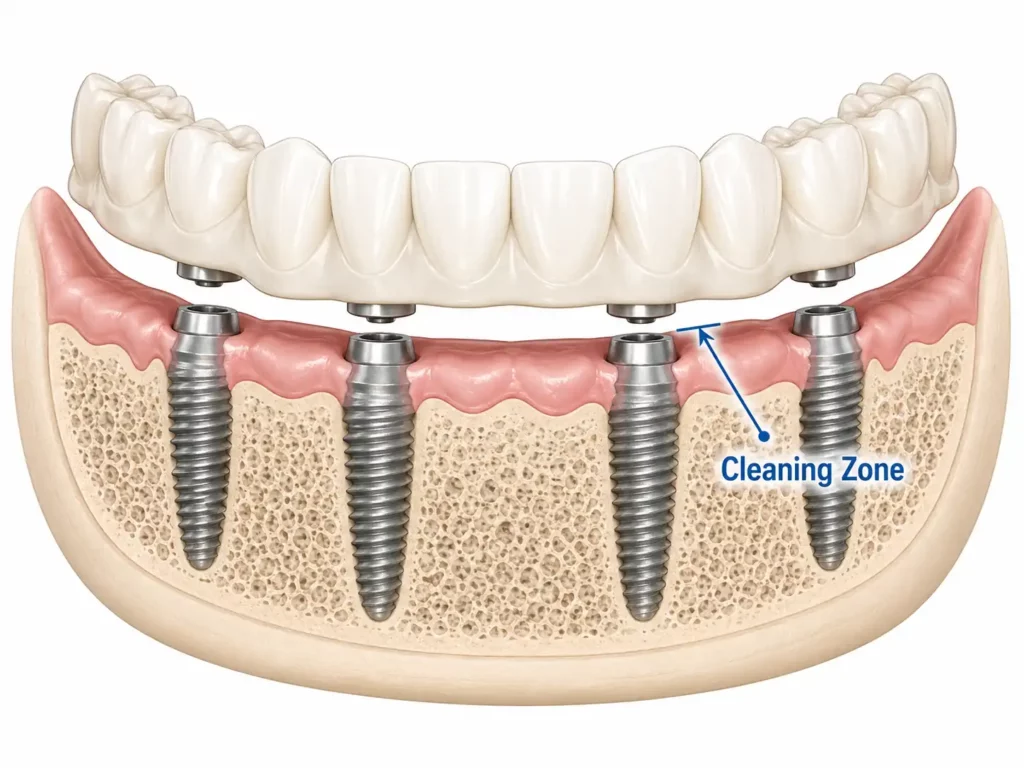

Natural teeth come up out of the gum one at a time. You can floss between every tooth because there is a gap between every tooth. With All-On-X, the bridge is one connected piece. There is no flossing between individual teeth because there are no individual teeth.
Instead, the cleaning challenge is the space underneath the bridge. The bridge sits a small distance off the gum to allow for hygiene access. That space, often called the intaglio surface, is where food, plaque, and bacteria collect. If you do not clean it, the gum tissue around your implants gets inflamed. That is called peri-implant mucositis, and if you ignore it long enough it turns into peri-implantitis, which is the implant version of gum disease and the leading cause of implant failure.
So the rule is simple. Clean the top of the bridge like teeth. Clean the underneath like the most important part of your mouth. Because it is.
Your Daily All-On-X Cleaning Routine
Short answer: Brush twice a day, water floss once a day, and run a soft interdental brush under the bridge once a day. The whole routine takes about five minutes.
Here is the routine I give my patients.
Morning
- Brush the bridge with a soft-bristled toothbrush and non-abrasive toothpaste. Two minutes, gentle pressure, all surfaces.
- Run a water flosser under the bridge along the gum line. Start on the lowest setting until you are comfortable with it.
- Rinse with water or a non-alcohol antimicrobial rinse if I have prescribed one.
Evening
- Brush again, same as the morning.
- Water flosser again, this time spending extra time under the bridge.
- Use an interdental brush or floss threader to physically sweep under the bridge from one side to the other. This is the step most patients skip and it matters.
That is the whole thing. Five minutes total. Less time than scrolling your phone before bed.
The Tools You Actually Need
You do not need to buy fifteen different products. Here is the short list.
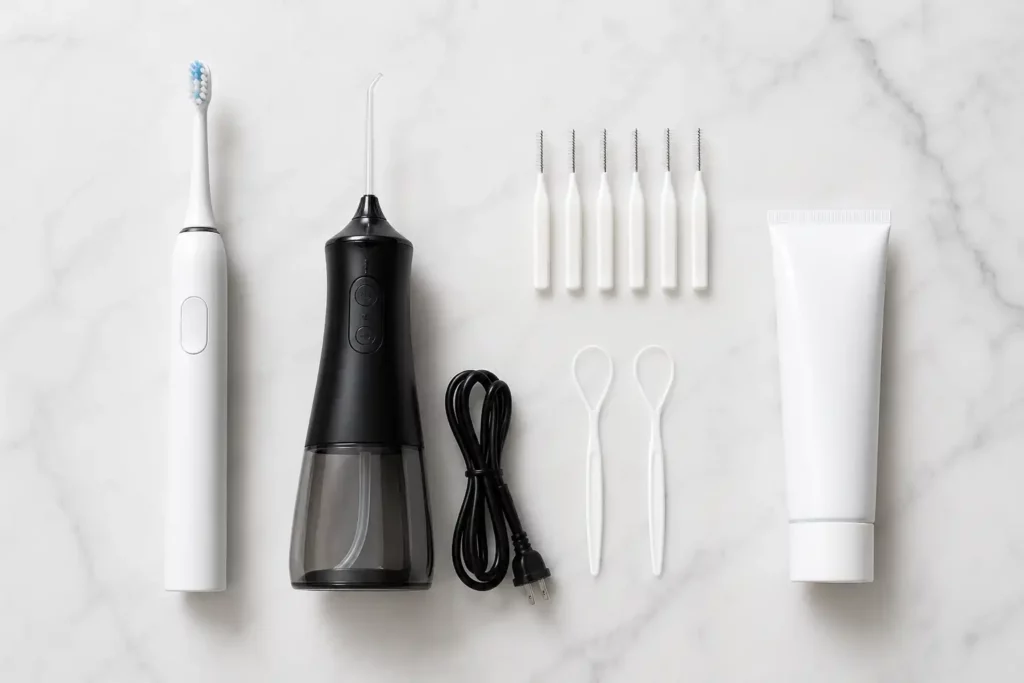
- Soft-bristled toothbrush. Manual or electric, both work. Electric brushes are easier on the wrist and tend to be more thorough. Avoid medium or hard bristles forever.
- Non-abrasive toothpaste. No whitening pastes, no charcoal, no baking soda formulas. Those are designed to scrub natural enamel and they can scratch the materials in your bridge. Look for a toothpaste labeled low-abrasion or marketed for sensitive teeth.
- Water flosser. A Waterpik or similar. This is not optional. This is the single most important tool for All-On-X care.
- Interdental brushes or floss threaders. Small soft brushes that fit under the bridge. Threaders let you pull regular floss under the bridge if you prefer that.
- Soft rubber-tip stimulator (optional). Helps massage the gums and dislodge debris around the implant collars.
If you are someone who likes a checklist, that is the entire shopping list. Total cost is usually under fifty dollars to get started, and replacement heads run a few dollars a month after that.
What to Avoid
Some habits will quietly damage your bridge or your implants over time. Worth knowing now rather than learning the hard way.
- Hard bristles. They can scratch the bridge surface, which gives plaque more places to stick.
- Whitening or abrasive toothpastes. Same reason. Plus, the bridge cannot be whitened the way natural teeth can. Whitening paste does nothing useful and only damages the finish.
- Metal scrapers or picks. Scratch the implant abutments. Stick with soft tools.
- Smoking. I know this is hard to hear if you smoke. But smoking is the single biggest controllable risk factor for implant failure. If you cannot quit completely, cutting back still helps.
- Skipping cleanings. Six month cleanings are not optional with implants. They are how we catch problems while they are still small.
- Chewing ice or hard objects. The teeth on your bridge are tough but not invincible. Ice, popcorn kernels, hard candy, and pen caps can chip the surface.
- Using your teeth as tools. Do not open packages with them. Do not bite fishing line. You know who you are.
The Six-Month Professional Cleaning
Brushing and water flossing at home handles ninety percent of the work. The other ten percent is what we do at your hygiene appointment, and that ten percent is where we catch the problems you cannot see.
A professional All-On-X cleaning is different from a regular cleaning in a few important ways:
- We use plastic or titanium-safe instruments. Standard metal scalers can damage the implant surfaces. Our hygienists are trained on the right tools.
- We sometimes remove the bridge. Not always, and not at every appointment. But periodically I will unscrew the bridge to clean both the underneath of the prosthesis and the implant abutments directly. This is the most thorough cleaning possible and it is something only your dentist can do.
- We take X-rays at intervals. Implants do not get cavities, but they can lose bone around them silently. Periodic digital X-rays are how we monitor the bone level around each implant over time.
- We check the screws and the fit. The bridge is held in by screws that can occasionally loosen. We check and retorque them as needed.
- We check your bite. Bite forces shift over time, especially if you grind. An uneven bite can stress one or two implants more than the others, which over years can lead to bone loss. Adjustments take a few minutes and can add years to the life of the work.
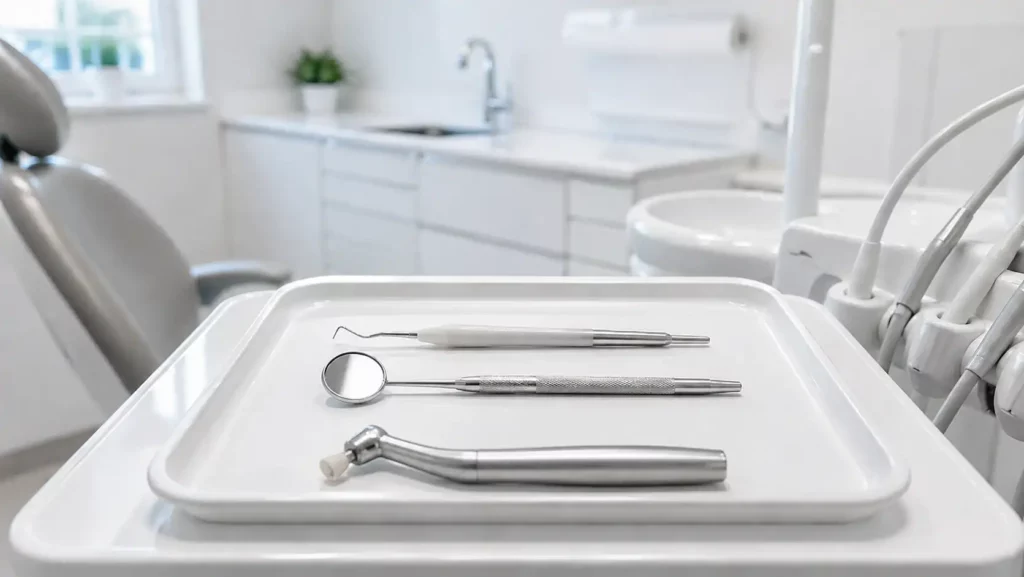
Skipping these visits is the most common reason I see All-On-X patients run into trouble. Please do not.
Watch For These Warning Signs
Most All-On-X care is uneventful. But here is what should make you call the office instead of waiting:
- Bleeding when you brush or water floss in the same spot for more than a few days
- Persistent bad breath or a bad taste that does not go away with cleaning
- A screw that feels loose, or a tooth on the bridge that wiggles slightly
- Pain or pressure around a specific implant
- Visible swelling, redness, or pus along the gum line
- The bridge clicking or moving when you bite
- A chip or crack in any of the teeth
Almost all of these are fixable, and almost all of them are easier to fix early. If you notice any of them, call us. If you cannot reach us during regular hours and the problem is urgent, our emergency dental services cover existing patients.
What If You Have a Long History of Gum Disease?
Patients who lost their natural teeth to periodontal disease sometimes worry that the same thing will happen to their implants. It is a fair concern. Bone biology does not change just because the tooth changed.
The honest answer is that you have to be more vigilant than the average patient. Not impossibly so, just consistent. Daily water flossing becomes non-negotiable. Three or four cleanings a year may be better than two. Smoking has to go. If any of that sounds familiar from our consultations, you are already on the right track. We covered some of this in our earlier post on whether gum disease can disqualify you from dental implants.
Travel, Sick Days, and Real Life
People ask me what to do when life gets in the way. Honest answers:
- Traveling. Pack the water flosser. Most have a travel mode. If yours does not, a portable Waterpik is worth the suitcase space.
- Sick with the flu. Do the best you can. A quick rinse with warm salt water helps when brushing feels like too much. Get back to the routine when you feel human again.
- Forgot the water flosser at home. Rinse vigorously with water after meals and double up the next day. Do not panic. One missed day is not a crisis.
- Out of toothpaste. Brushing with just water and a soft brush is better than nothing. Do not use whitening toothpaste from the gas station as a substitute.
Consistency matters more than perfection. For broader habits that protect your oral health between cleanings, our post on how to maintain oral health between dental visits covers the basics that apply whether or not you have implants.
Frequently Asked Questions
The implants themselves can last decades and often a lifetime when the surrounding bone stays healthy. The bridge attached to the implants typically lasts ten to twenty years before it may need refurbishment or replacement. Cleaning, hygiene visits, and avoiding smoking are the biggest factors in long-term success.
Not the way you flossed natural teeth. The bridge is one connected piece, so traditional flossing between teeth is not possible. Instead, you use a water flosser daily and an interdental brush or floss threader to clean under the bridge. That replaces traditional flossing.
Yes, as long as it has a soft brush head and you use non-abrasive toothpaste. Electric brushes are actually easier on most patients because they do the work for you and are less likely to apply too much pressure.
Yes, for All-On-X specifically. The space under the bridge cannot be reached effectively with a brush alone or with traditional floss. A water flosser is the most reliable way to clean the area around the implants every day. It is the single most important tool for long-term implant health.
Use a non-abrasive, low-RDA toothpaste. Avoid whitening toothpastes, charcoal toothpastes, and baking soda formulas. Sensitive-teeth formulas are a safe default for most patients. Ask your dentist or hygienist for a specific recommendation if you are not sure.
No. The bridge is made from materials that do not respond to whitening agents. If your teeth start looking dull over time, that is usually surface staining and a professional cleaning will handle it. If they look worn, the bridge may need a refurbishment, which we can discuss.
Common signs are bleeding when brushing the same area repeatedly, persistent bad breath or bad taste, redness or swelling along the gum line, and discomfort or pressure around a specific implant. Any of these warrant a call. Early-stage peri-implant mucositis is reversible. Later-stage peri-implantitis is harder to treat, so do not wait.
Every six months at minimum. Some patients with a history of gum disease, diabetes, or a heavy plaque buildup do better at three or four month intervals. We will tell you what is right for your specific case at your appointments.
Why Manduzzi Family Dentistry for All-On-X Maintenance
Where you go for your routine cleanings matters as much as where you got the implants placed. Hygienists who do not work with implants regularly can use the wrong instruments and damage the abutment surfaces. We have been placing and maintaining implants for years, our hygienists are trained on implant-specific protocols, and we keep the right tools on hand.
A few things our patients can count on:
- Hygienists trained specifically in implant maintenance, not just natural teeth
- Titanium-safe and plastic instruments to protect implant surfaces
- Periodic full-bridge removal cleanings when clinically appropriate
- In-office digital X-rays to monitor bone levels around each implant
- Dr. Manduzzi personally reviews every implant case at hygiene visits
We see All-On-X patients from across Utica, Shelby Township, Sterling Heights, Rochester Hills, and the greater Macomb County area. If you had your implants placed elsewhere and want a hygiene team that knows what they are doing with full arch work, you are welcome here too. Many of our All-On-X patients are also navigating other oral health changes that come with age, which we covered in our guide to maintaining a healthy smile in your golden years.
Schedule Your Implant Hygiene Appointment
If you are due for a cleaning, or it has been longer than six months and you are not sure where to start, give us a call. We will get you in, take a look at the bridge and the gum tissue, take any X-rays we need, and get you back on a schedule that protects the work you invested in.
If you are still researching All-On-X and have not had it done yet, our All-On-X service page walks through the procedure, candidacy, and what to expect, and our overview of dental implants covers single-tooth and multi-tooth options as well.
Call us at (586) 731-9240 or reach out through the contact page to book.
Contact Us to Schedule An Implant Hygiene Appointment Today!